Conducting Effective Market Research for Tech Startups
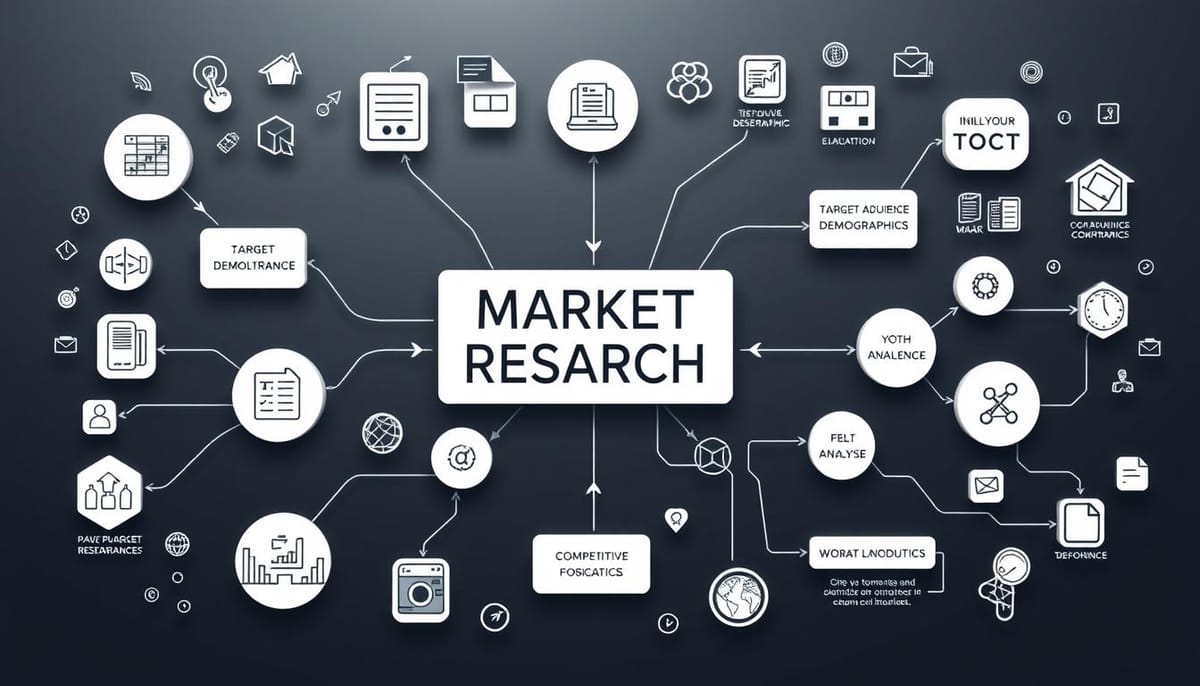
In the fast-paced world of tech startups, market research is key. It helps validate ideas, understand customers, and boost success chances. Effective market research gives startups the insights to improve their offerings and pricing. It also helps attract investors.
Market research falls into two main types: primary and secondary. Primary research collects new data through interviews and surveys. It helps understand customer needs1. Secondary research uses existing data from reports and databases. It offers insights into market trends1.
Thorough market research is vital for startup success2. Half of new businesses fail in the first five years. This shows how crucial market research is in tackling challenges2. Investors also look for startups that have done their homework on the market1.
Key Takeaways
- Market research is essential for tech startups to validate business ideas and understand their target audience.
- Primary research involves collecting new data through methods like interviews, surveys, and focus groups.
- Secondary research utilizes existing data from industry reports, public databases, and proprietary information.
- Thorough market research can improve a startup's chances of success and attract the attention of potential investors.
- Startups should continuously iterate and improve their products based on customer feedback and changing market dynamics.
Understanding Market Research Fundamentals
For tech startups, doing good market research is key. It helps them follow industry trends and understand their customers. This research is vital for finding the right product-market fit and growing3.
Knowing who your customers are is very important, especially when you're just starting out3. It's also important to look at what your competitors are doing. This helps you find a unique spot in the market3. Figuring out what your customers like and use helps you make something better3.
Primary vs. Secondary Research Methods
Market research uses different ways to get information, like surveys and reports4. Primary research means getting data directly from people, through surveys or groups4. Secondary research looks at data others have collected, like reports4.
Key Components of Effective Market Research
Good market research finds gaps in what people need, which can be opportunities3. It uses surveys for big data3. It also uses interviews and studies to get deeper insights3. Looking at public data and studies is part of secondary research3.
Benefits for Tech Startups
Using what you learn from research is important for your marketing and product plans3. Doing research early helps you stay ahead by matching your plans with market needs3. Knowing the market well can also help you get funding from investors3.
Defining Your Research Objectives and Scope
When doing effective market research, tech startups must set clear goals. Start by making hypotheses to answer your questions. This could be about what people are willing to pay, what problems they face, and if your product fits the market5.
Keep your hypotheses to a few to stay focused. This makes your research more manageable and effective.
Set your research goals to fill in any knowledge gaps and check your assumptions about customers. Assign teams to different areas, like how buyers behave and their payment habits. This method gives you insights for market segmentation and market entry strategies5.
Startups that do market research are 20% more likely to succeed than those that don't5. On average, they spend 10-15% of their budget on research5. By using these insights, 72% of startups see their sales grow in the first year5.
The market research industry has many options for startups. You can choose from full-service consultants or DIY survey platforms for $20-30 a month6. View market research as an investment, not a cost. It gives direction, clarity, and feedback from potential buyers, helping avoid business failure6.
Startup Market Research: Essential Tools and Resources
For tech startups to thrive, they must do thorough market research. They can use digital platforms, data tools, and survey solutions. These help them understand their market, trends, and competitors7.
Digital Research Platforms
Startups can use Google Alerts, Google Trends, and social media. These tools help them keep up with market trends and competitors8.
Data Analytics Tools
Data analytics tools are key for startups. They help process big data and make smart decisions. Tools like Tableau and Google Data Studio make it easy to see and analyze data8.
Survey and Feedback Solutions
Getting direct feedback from customers is vital. Online surveys and interviews help startups understand their market. Tools like SurveyMonkey make it easy to collect feedback8.
Startups can also use reports from firms like G2 and Deloitte. Online communities like Facebook Groups offer insights into customers and the market8.
By using many market research tools, startups can deeply understand their market. This knowledge helps them make better decisions and succeed7.
| Research Method | Cost | Timeframe | Sample Size |
|---|---|---|---|
| Online Surveys | $20-30 per month | 72 hours to 6 weeks | Large |
| Focus Groups | $1,500-$6,000 per group | 2-4 weeks | Small |
| Interviews | $50-$200 per interview | 1-3 weeks | Small |
By combining these tools, startups can deeply understand their market. This knowledge boosts their chances of success78.
Analyzing Your Target Market and Customer Base
Understanding your target audience is key for tech startups. By creating buyer personas, you can group your customers for better targeting9. Important data includes age, location, and more9.
To really know your customers, use people from your current and past customers10. Offer incentives to get more people involved. Using both quantitative and qualitative methods gives a full picture910.
Quantitative research gives numbers, while qualitative research uncovers why customers act a certain way10. This mix helps tech startups create detailed customer profiles. It guides their product and marketing plans910.
| Research Method | Insights Provided |
|---|---|
| Quantitative | Numerical data, statistics, and facts |
| Qualitative | Psychographic data, customer sentiment, preferences, and attitudes |
By mixing primary and secondary research, startups can deeply understand their target audience, customer insights, and market segmentation. This is crucial for making successful products and marketing campaigns910.
https://www.youtube.com/watch?v=EUp8hJVRmCI
Competitive Analysis and Market Positioning
In the fast-changing tech startup world, it's key to do a deep competitive analysis. This helps you stand out and set up for success. By knowing your competitors, you can spot threats, find gaps, and match your offerings to what your market wants11.
Industry Benchmarking
By comparing your startup to big players in the field, you gain insights. Looking at things like pricing, customer feedback, and how you're seen can show your strengths and weaknesses. This helps shape your entry into the market12.
SWOT Analysis Framework
The SWOT (Strengths, Weaknesses, Opportunities, Threats) analysis is a common tool for startups. It helps you look at your own strengths and weaknesses, and those of your rivals. This way, you can find areas to get better and spot chances for growth11.
Market Gap Identification
It's also vital to find gaps in the market that your startup can fill. By studying trends, customer needs, and new tech, you can find opportunities. This makes your product or service stand out, giving you an edge and helping you grow over time13.
FAQ
What is the importance of market research for tech startups?
Market research is key for tech startups. It helps validate ideas, understand customers, and boost success. By gathering data, startups can see if their product fits the market. This research can also guide pricing and attract investors.
Without it, 50% of new businesses fail within five years.
What are the different types of market research methods?
There are two main types of market research. Primary research collects new data through surveys and interviews. Secondary research uses existing data from reports and online communities.
What are the key components of effective market research?
Good market research starts with a clear purpose. It involves studying the target market and competitors. Choosing the right methods and conducting unbiased research are also crucial.
This helps fill knowledge gaps and verify assumptions about customers.
What are the benefits of market research for tech startups?
Market research is vital for tech startups. It helps test products, attract investors, and clarify the customer base. It increases the chances of success by understanding customer needs and behaviors.
How do you define your research objectives and scope?
Begin by forming hypotheses to answer your research questions. This could be about customer willingness to pay or identifying pain points. Limit your hypotheses to stay focused.
Define your research goals to address knowledge gaps and verify assumptions about potential customers.
What are some essential tools and resources for startup market research?
Useful tools include digital platforms like Google Alerts and Google Trends. Data analytics tools and survey solutions are also helpful. Industry reports from G2, Deloitte, Gartner, and McKinsey provide valuable insights.
Online communities like Facebook Groups, Reddit, and ProductHunt can offer additional insights.
How do you analyze your target market and customer base?
Start by creating buyer personas to segment your audience. This helps in targeting better. Use both quantitative and qualitative research methods to understand each group's behaviors and preferences.
Why is competitive analysis important for tech startups?
Competitive analysis is crucial for tech startups. It helps understand how similar businesses operate and identify indirect competitors. This analysis allows startups to differentiate themselves and find market gaps.
Ignoring competition is a major factor in 20% of startup failures.